ISO 13485 Lead Auditor
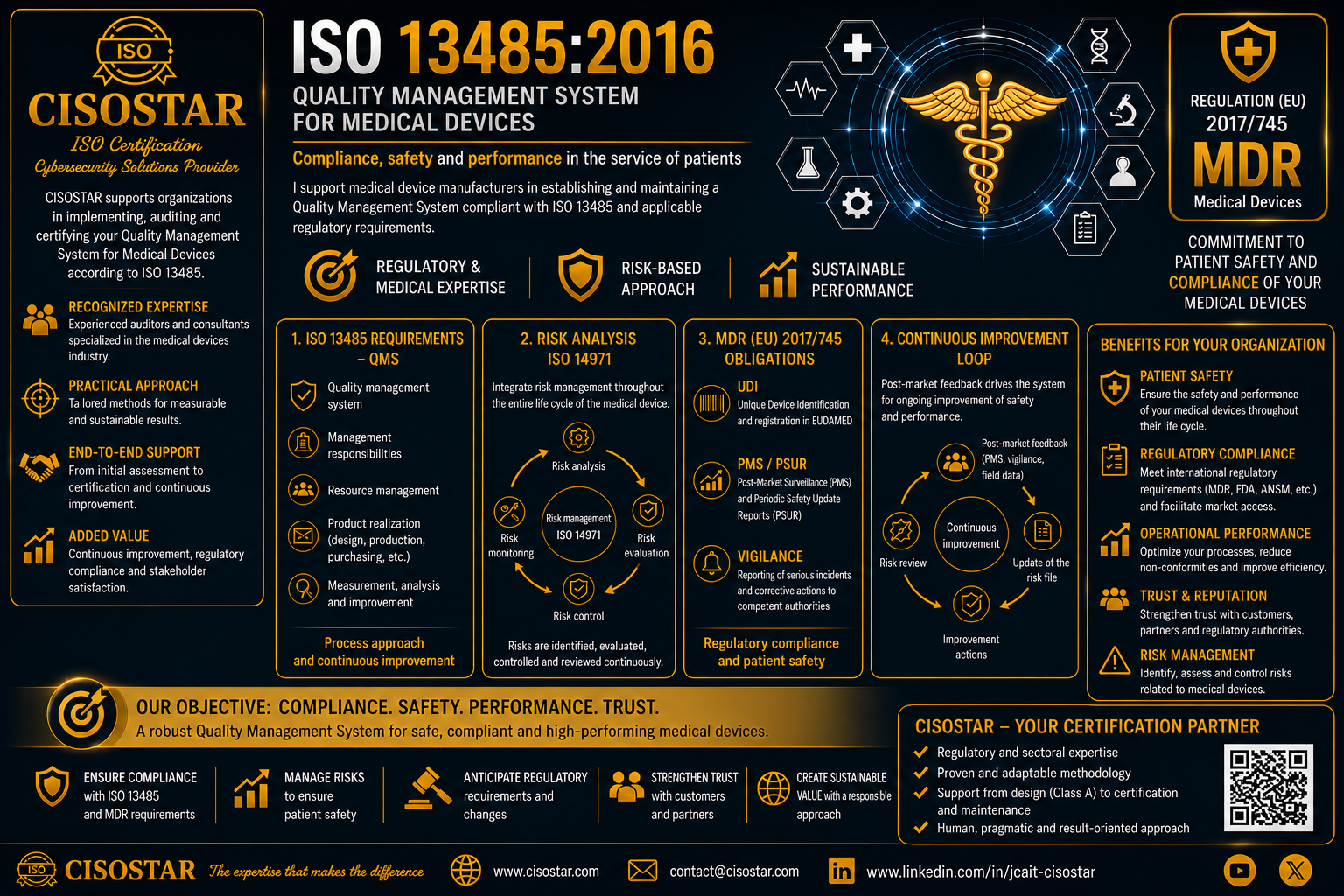
ISO 13485 is an international standard developed by the International Organization for Standardization (ISO) that specifies the requirements for a Quality Management System (QMS) for organizations involved in the design, development, production, installation, servicing, and distribution of medical devices. The ISO 13485 standard is designed to help organizations consistently provide safe, effective, and regulatory-compliant medical devices by implementing a robust quality management system that meets customer expectations and applicable regulatory requirements throughout the entire product lifecycle.
Objectives of ISO 13485
ISO 13485 enables organizations to:
-
Improve patient safety
-
Ensure consistent product quality
-
Reduce regulatory risks
-
Increase operational efficiency
-
Strengthen supplier control
-
Enhance customer confidence
-
Facilitate international market access
-
Support compliance with MDR, IVDR, FDA, MDSAP and other regulatory frameworks
Typical Organizations Concerned
ISO 13485 applies to:
-
Medical device manufacturers
-
In-vitro diagnostic (IVD) manufacturers
-
Contract manufacturers
-
Sterilization providers
-
Medical device distributors
-
Importers and exporters
-
Authorized representatives
-
Design organizations
-
Medical device software developers
-
Calibration laboratories
-
Service and maintenance providers
Key Requirements of ISO 13485
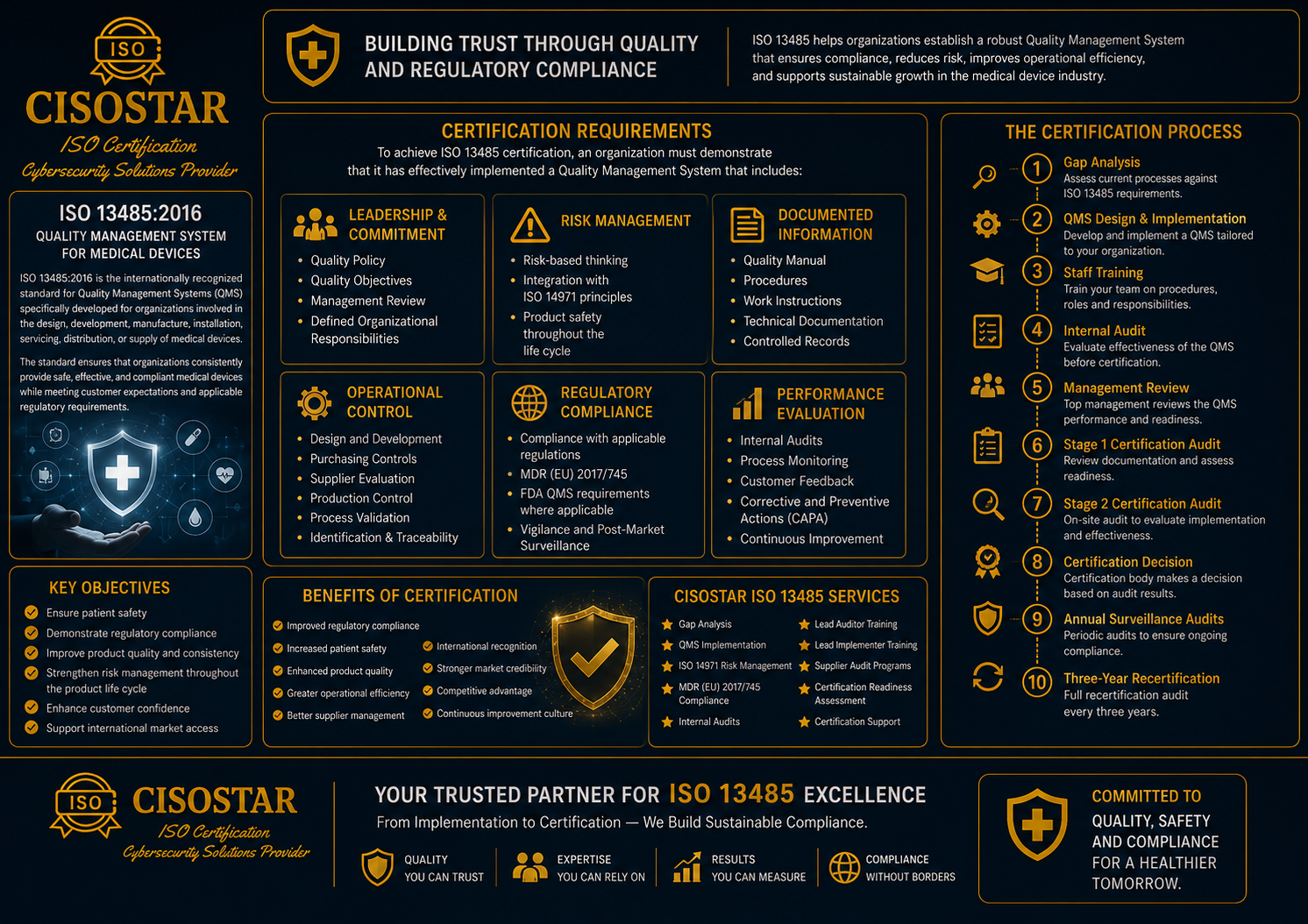
An organization seeking ISO 13485 certification is expected to establish and maintain a comprehensive Quality Management System that includes:
-
Quality Management System documentation
-
Management responsibility and leadership
-
Risk-based thinking throughout the product lifecycle
-
Design and development controls
-
Supplier qualification and purchasing controls
-
Production and process validation
-
Identification and traceability
-
Cleanliness and contamination control
-
Monitoring and measuring equipment
-
Complaint handling
-
Post-market surveillance
-
Corrective and Preventive Actions (CAPA)
-
Internal audits
-
Management reviews
-
Regulatory compliance with applicable medical device legislation
-
Continual improvement of the Quality Management System
Certification Process
Organizations generally follow these stages:
- Gap Analysis
- Project Planning
- QMS Development
- Documentation
- Risk Management (ISO 14971)
- Staff Training
- System Implementation
- Internal Audit
- Management Review
- Corrective Actions
- Stage 1 Certification Audit
- Stage 2 Certification Audit
- Certification
- Annual Surveillance Audits
- Recertification every three years
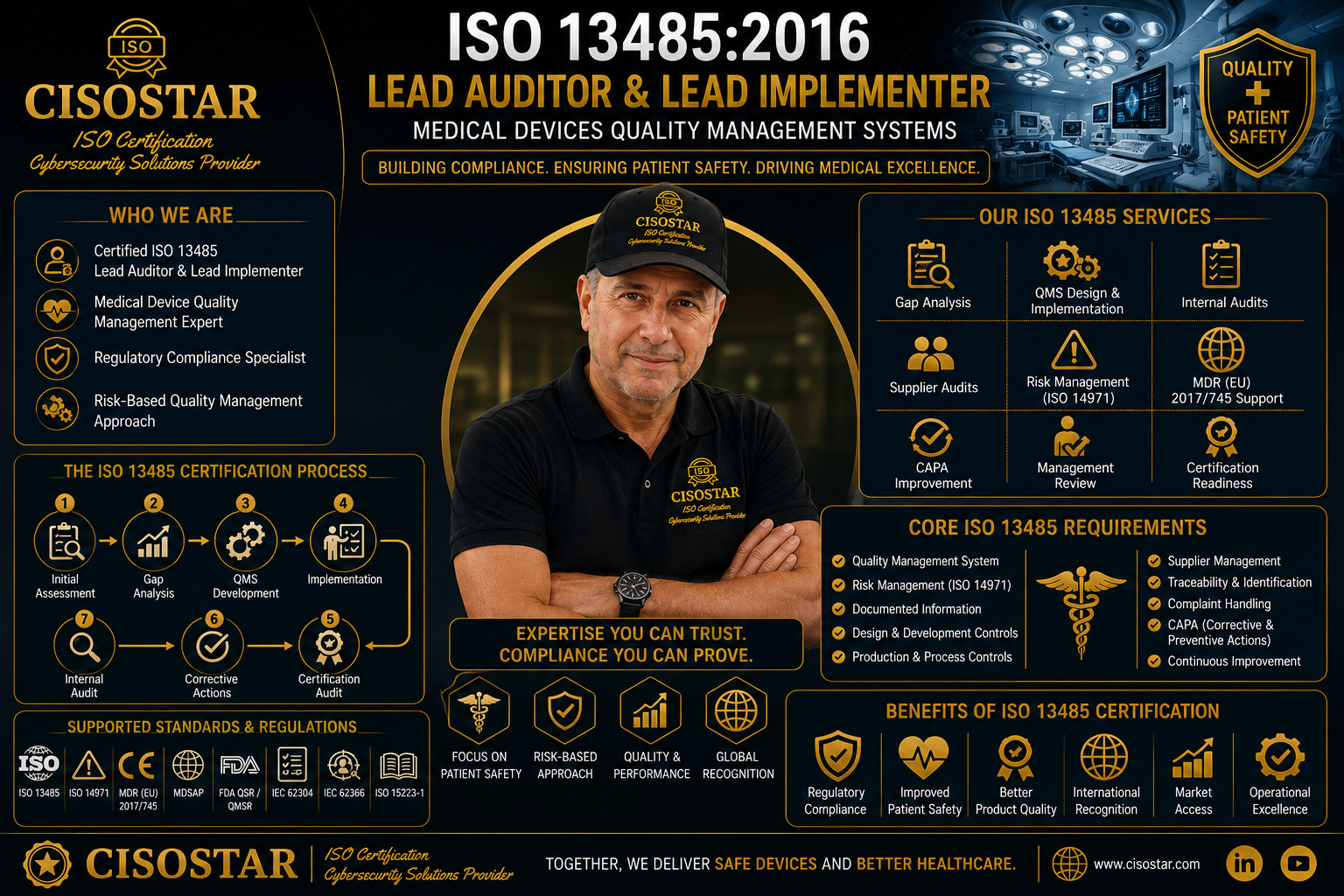
Main Benefits of Certification
Organizations certified to ISO 13485 benefit from:
-
International recognition
-
Improved patient safety
-
Enhanced product reliability
-
Stronger regulatory compliance
-
Better operational control
-
Increased market credibility
-
Competitive advantage
-
Reduced quality costs
-
Improved supplier performance
-
Greater customer satisfaction
-
Easier access to global markets
-
Improved business continuity and sustainable growth